
WEST PLAINS, Mo. – In recent years, microbiologists and healthcare professionals have been looking for ways to counter the rise of drug-resistant bacteria, including research into viruses called bacteriophages, also known as phages.
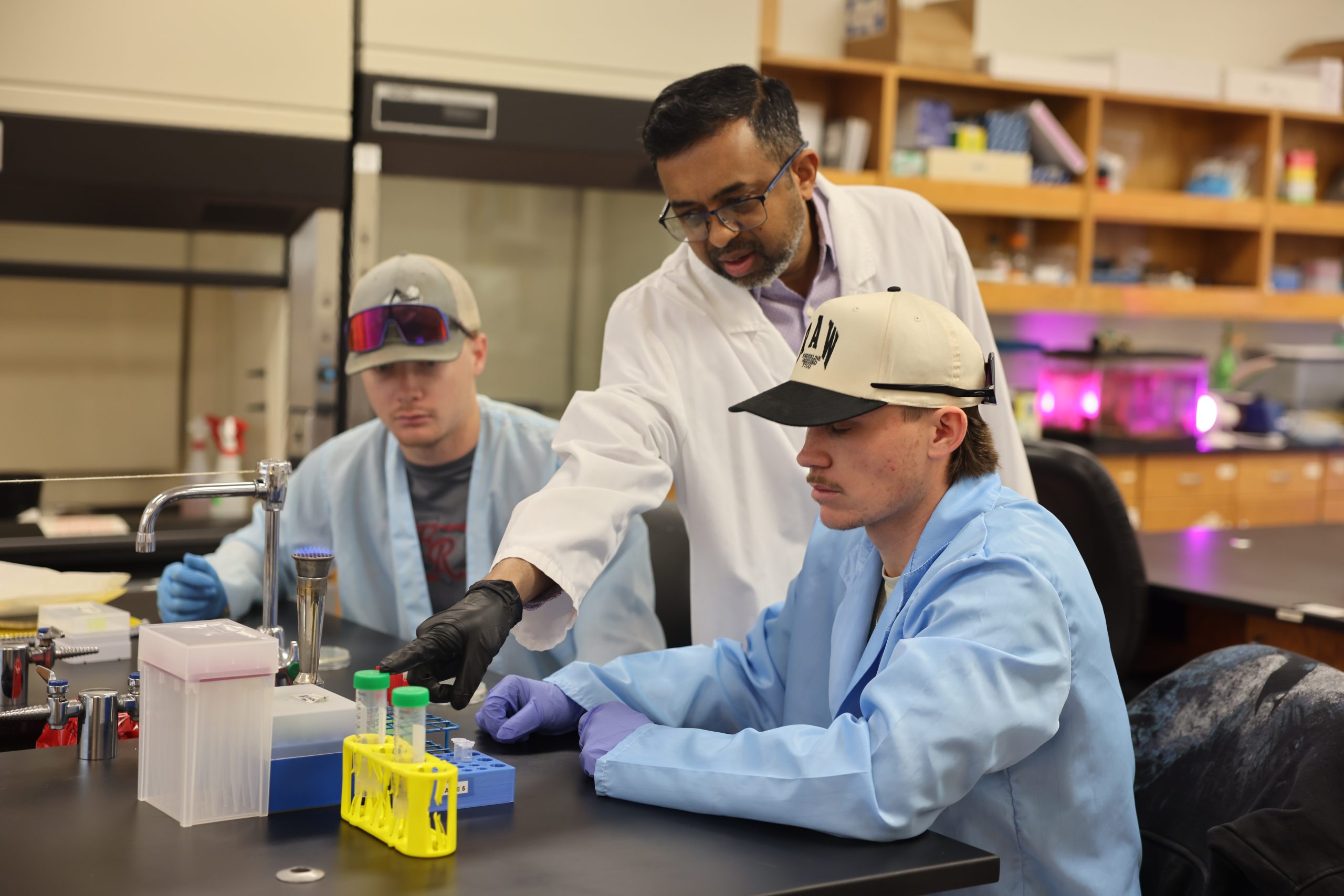
During the 2025-26 academic year, students in Dr. Sharath Rongali’s biology class, at Missouri State-West Plains (MSU-WP), participated in the Howard Hughes Medical Institute’s bacteriophage research course called SEA-PHAGES (Science Education Alliance-Phage Hunters Advancing Genomics and Evolutionary Science), which spanned two semesters. Ana Estrella, Department Chair of Natural and Applied Sciences, and Cedric Wooledge, Laboratory Supervisor, assisted with the successful completion of the program.
More about the program
“The SEA-PHAGES program is a student research project designed for college students with limited or no-prior research experience,” Rongali said. “The SEA-PHAGES curriculum substitutes the standard lab exercises in the general biology classes,” he added.
The course curriculum introduces students to a research experience that actively engages students to use scientific methods and data interpretation. “Students will receive training in a Course-Based Undergraduate Research Experience (CURE), which can translate into an interest in science,” Rongali added.
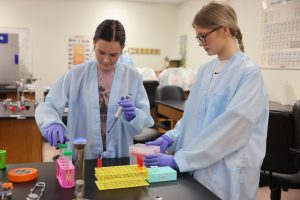
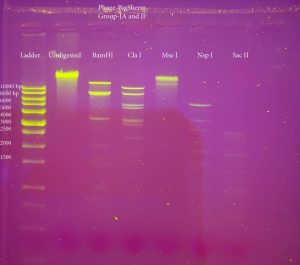
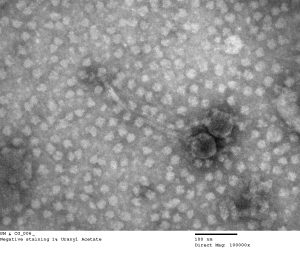
During the first semester, the students worked through the discovery process. They isolated and purified phages from environmental samples they collected. Using electron microscopes to view the samples, the students analyzed the phage’s characteristics. They also evaluated the quality of the phage’s genomic DNA to determine which genome would be submitted to the Pittsburgh Bacteriophage Institute for sequencing and settled on one bacteriophage they had named “BigSherm.”
In the second semester, the students used the data they received from the sequencing process and worked on genome annotation, which is a multi-step process that involves identifying the genes and their functions, and submitting them to the national database, GenBank.
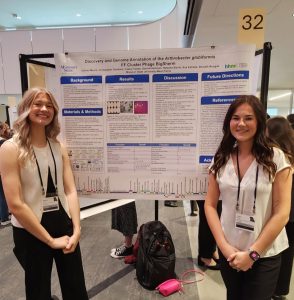
At the end of the second semester, students presented their findings at the Missouri Academy of Science’s 63rd annual meeting, held April 8 and 9 at Missouri State in Springfield, and at the National SEA symposium, a virtual conference from April 24-26.
Additional information
SEA-PHAGES is jointly administered by the Howard Hughes Medical Institute, Graham Hatful at the University of Pittsburgh, and Steve Cresawn at James Madison University.
SEA-PHAGES started in 2008 and is now in its 19th cohort with more than 200 institutions participating. MSU-WP is one of seven institutions from Missouri and one of the 48 community colleges nationwide participating in the program.
For more information about this research project, please contact Dr. Sharath Rongali at SRongali@MissouriState.edu