
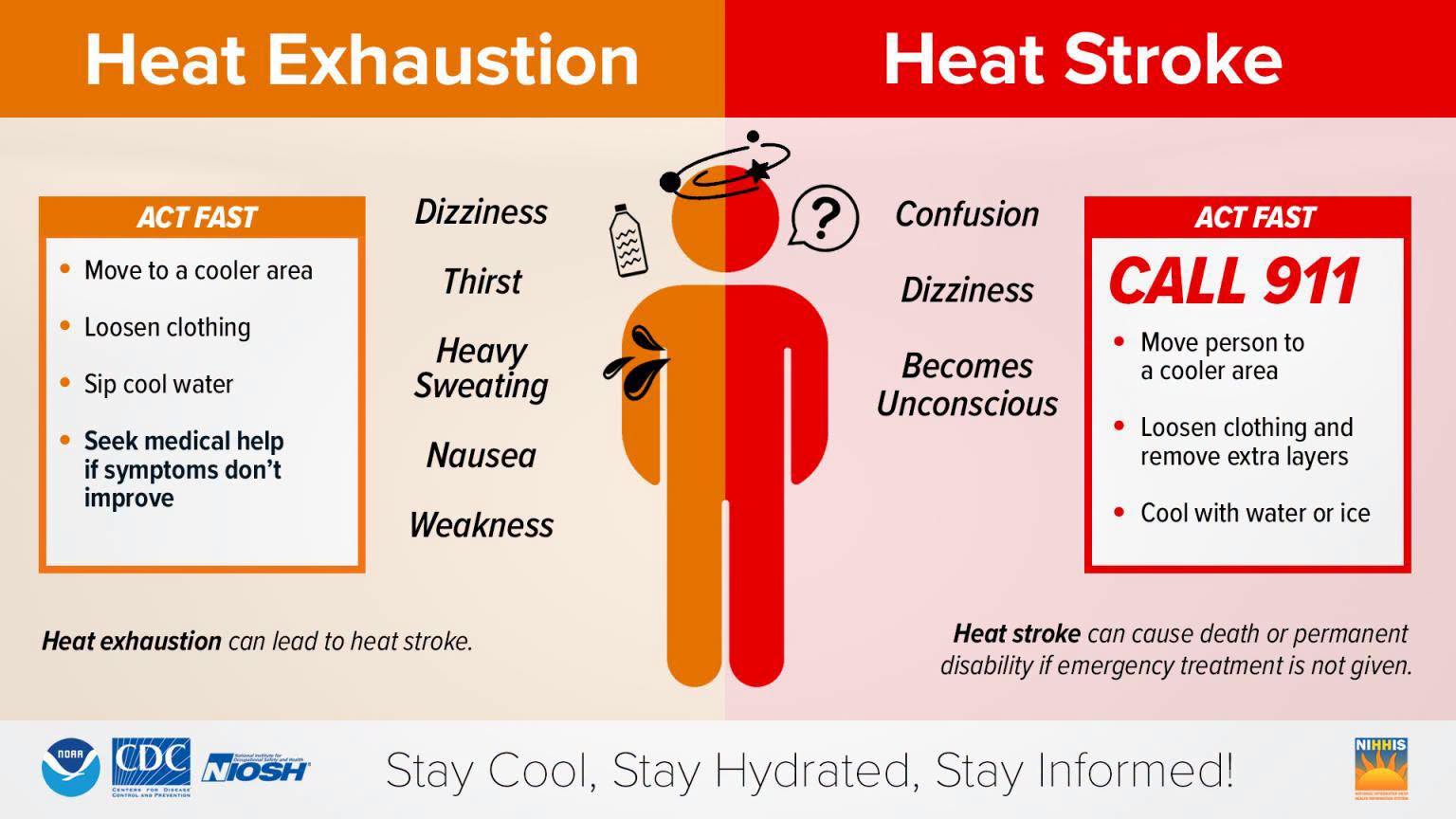
Public health officials are urging residents to take precautions as dangerously high temperatures continue across the region. A new safety graphic from federal agencies highlights the critical differences between heat exhaustion and heat stroke, emphasizing that quick action can save lives.
According to the guidance, heat exhaustion often begins with symptoms such as dizziness, intense thirst, heavy sweating, nausea, and general weakness. Officials advise moving to a cooler area, loosening clothing, and sipping cool water. If symptoms fail to improve, medical attention is recommended.
The warning becomes more severe with heat stroke, a life‑threatening emergency marked by confusion, loss of consciousness, or severe dizziness. In these cases, authorities say to call 911 immediately, move the person to a cooler area, loosen clothing, remove extra layers, and begin cooling with water or ice until help arrives.
Federal agencies note that untreated heat exhaustion can progress to heat stroke, which can cause permanent disability or death. With temperatures expected to remain high, residents are encouraged to stay cool, stay hydrated, and stay informed.